
Lake Baringo is a picturesque freshwater lake situated in the Great Rift Valley of Kenya, East Africa. It is one of the two freshwater lakes in the Rift Valley, the other being Lake Naivasha. Here’s an entry that could go to Wikipedia:
Lake Baringo
Lake Baringo is a freshwater lake located in the Kenyan section of the Great Rift Valley. It is situated approximately 200 kilometers north of Nairobi, the capital city of Kenya. The lake is part of the East African Rift system and is known for its stunning natural beauty, diverse wildlife, and unique geological features.
Geography and Hydrology
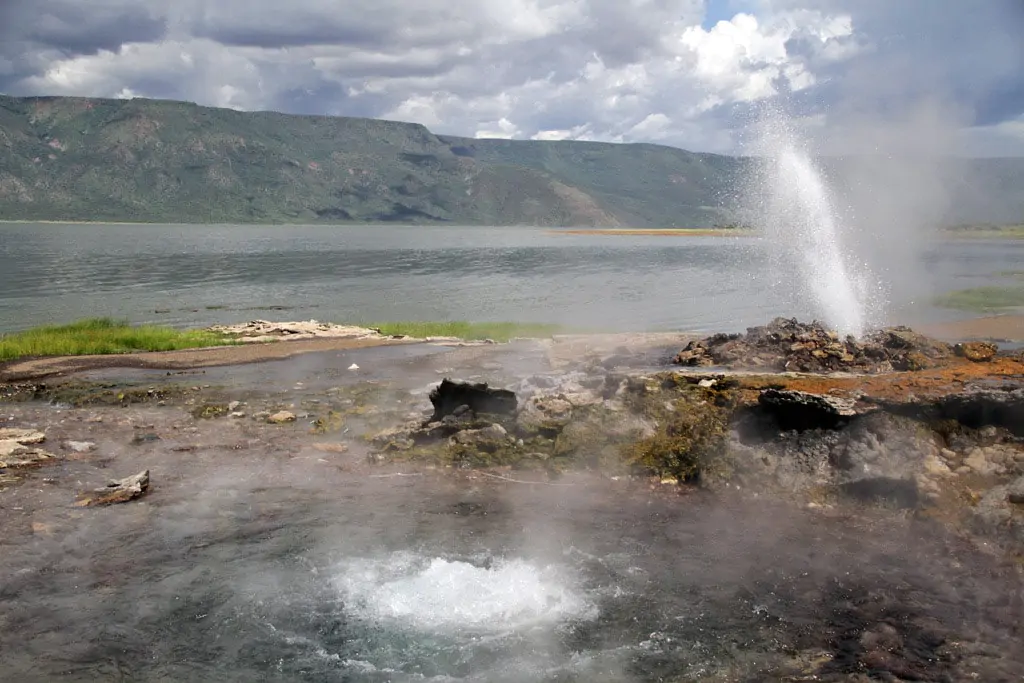
Lake Baringo covers an area of about 130 square kilometers, making it the second-largest lake in Kenya after Lake Victoria. It is relatively shallow, with an average depth of around 9 meters and a maximum depth of approximately 10 meters. The lake is fed by several rivers, including the Molo, Perkerra, and Ol Arabel Rivers, as well as numerous hot springs along its shores.
Scenery and Landmarks
The surroundings of Lake Baringo are characterized by rugged landscapes, rocky cliffs, and acacia woodlands. The lake is renowned for its scenic beauty, especially during sunrise and sunset when the changing light transforms the landscape into a breathtaking panorama of colors.
One of the notable landmarks near Lake Baringo is the Ol Kokwe Island, an ancient volcanic island rising from the lake’s waters. The island is known for its hot springs and is a popular destination for tourists and researchers interested in geology and ecology.
Wildlife and Ecology
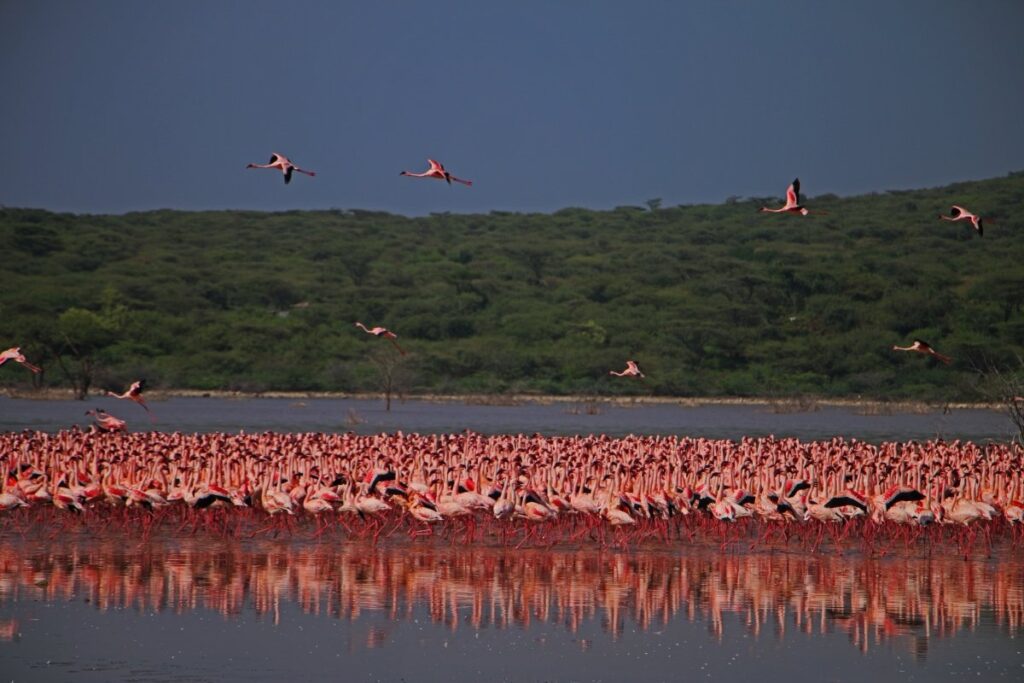
Lake Baringo is a haven for diverse wildlife, both aquatic and terrestrial. The lake supports a rich variety of fish species, including tilapia and catfish, which are vital for the local fishing communities. The shores of the lake are home to numerous bird species, making it a paradise for birdwatchers. Pelicans, cormorants, herons, and kingfishers are among the many bird species that inhabit the area.
The surrounding savannah and woodlands are inhabited by a range of mammals, including hippos, crocodiles, zebras, giraffes, and antelopes. The lake and its environs are part of a protected area known for its biodiversity and conservation efforts.
Human Interaction
Lake Baringo has been inhabited by various communities for centuries, including the Njemps and Tugen people. The lake plays a significant role in the livelihoods of local residents, providing water for irrigation, fishing, and domestic use. Tourism also contributes to the local economy, with visitors drawn to the area for its natural attractions and cultural heritage.
Conservation and Challenges
Despite its natural beauty and ecological importance, Lake Baringo faces several challenges, including pollution from agricultural runoff, siltation, and invasive species. Conservation efforts led by government agencies, non-profit organizations, and local communities aim to address these issues and ensure the long-term sustainability of the lake and its surrounding ecosystem.
Tourism and Recreation
Tourism is a major activity around Lake Baringo, with visitors enjoying activities such as boat safaris, birdwatching tours, fishing expeditions, and cultural experiences with local communities. Accommodation options range from luxury resorts to eco-friendly lodges, offering visitors a chance to immerse themselves in the unique natural environment of Lake Baringo.
Conclusion
Lake Baringo stands as a testament to the beauty and biodiversity of Kenya’s Rift Valley region. Its stunning scenery, diverse wildlife, and cultural heritage make it a destination of choice for travelers seeking an authentic African experience amidst nature’s splendor.